What an accounts page shows
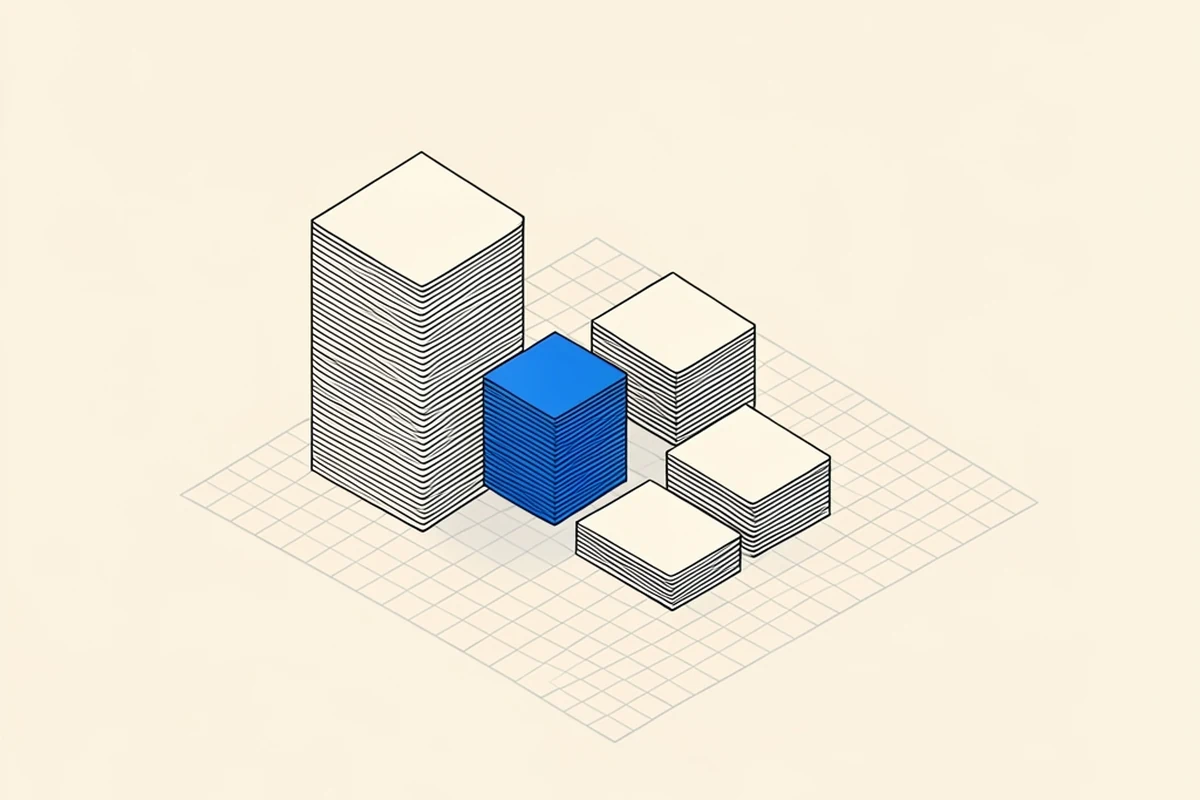
An accounts page — often called a rich list — ranks the addresses on a chain by native-coin balance, with each one’s share of the total. It is the chain-wide equivalent of a token’s holders page, and it carries the same strengths and the same traps.

What it is useful for
Two things, mainly. It shows how concentrated a chain’s native asset is, which is a structural fact about the network rather than a market opinion. And it makes the largest participants visible, which is the starting point for understanding who actually operates on a chain — exchanges, bridges, foundations and staking contracts all show up near the top.
For a small or new chain it is also a rough measure of how real the thing is. A network claiming broad adoption whose rich list is short and heavily weighted toward a few addresses is describing something different from what its own chain records.
What it misleads about
- The top entries are usually not people. Exchange hot wallets, bridge contracts and staking pools dominate most rich lists, and each holds value on behalf of many others.
- Address count is not user count. One person can hold hundreds of addresses and frequently does; conversely one exchange address can represent a million users.
- It ignores everything held off-chain. Balances held with a custodian appear under the custodian, not the beneficiary.
- Native balance is not wealth. On an account-based chain an address’s tokens, positions and locked assets are invisible to a native-coin ranking.
The general principle is the one that runs through every explorer view: the page reports the ledger accurately, and the ledger is not a map of people. Reading a rich list as a list of the richest individuals on a chain is a category error.
Using it as a check
- Look at the total number of accounts before the ranking. It bounds every adoption claim made about the chain.
- Identify the top ten and mark which are contracts or known services.
- Check the share held by the top entries after removing custodial and contract addresses — that residual is the meaningful concentration figure.
- Compare the shape to the chain’s stated distribution. Public allocation plans are testable here.
A note on chains without a working explorer
Every check on this page assumes an explorer exists and is operated independently of the project it indexes. That assumption fails more often than newcomers expect. Explorers are infrastructure someone has to pay to run, and when a project winds down or loses funding, the explorer is frequently the first thing to go — taking public verifiability of that chain with it.
For a widely used chain there are normally several independent options, including multi-chain explorers such as blockchair that index many networks from a single interface — which is useful precisely because it lets you check the same question against a second source. When a chain has no working explorer at all, its records may still exist for anyone running a node, but they are effectively unavailable to ordinary users. At that point any figure quoted about that chain by any website is an assertion rather than something you can check — and that includes figures presented in an explorer-like layout.
Related views
Reading a single address, token holder distribution, transfer logs, the token overview, and what all of it renders.
Frequently asked questions
What is an accounts page or rich list on a block explorer?
A ranking of a chain's addresses by native-coin balance, with each one's share of the total. It is the chain-wide equivalent of a token's holders page.
Are the top addresses on a rich list the richest people on a chain?
No. Most top entries are exchange hot wallets, bridge contracts and staking pools holding value for many others. Reading a rich list as a list of individuals is a category error.
Does the number of addresses tell me how many users a chain has?
No. One person can control hundreds of addresses, and a single exchange address can represent a million users. Address count bounds adoption claims but does not measure users.
What happens when a chain's block explorer shuts down?
The records still exist for anyone running a node, but they become effectively unavailable to ordinary users. Any figure quoted about that chain then becomes an assertion rather than something you can independently check.